
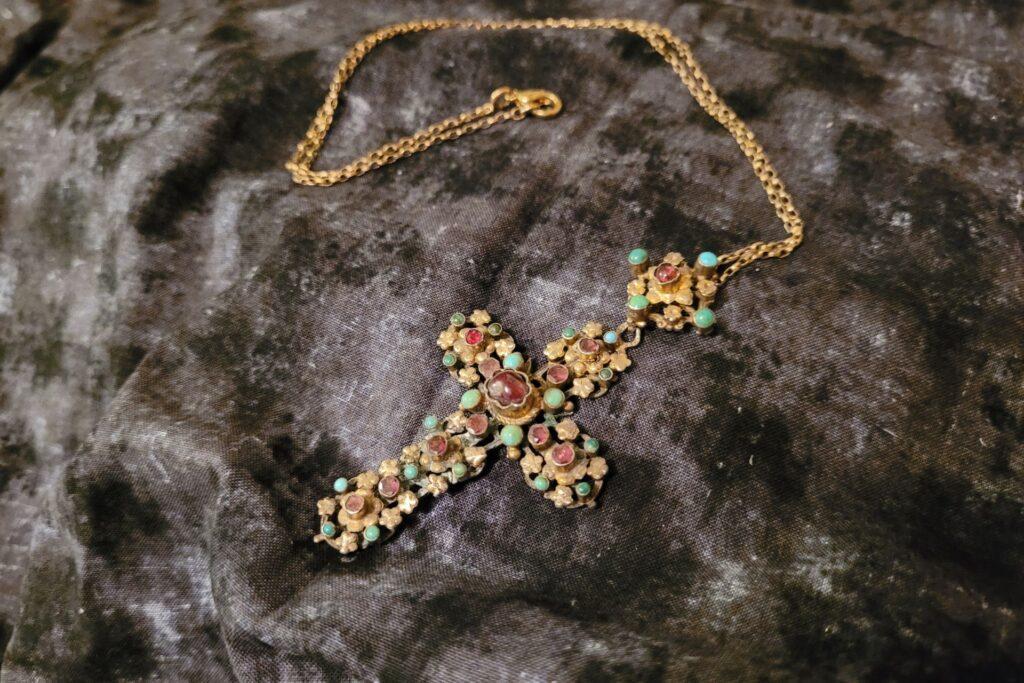
Many persons are collectors, and there are many items that can be collected. Baseball cards, Star Wars figures, and vintage automobiles are just three on a list containing myriad possibilities.
The term “antiques” covers quite a varied mix, just on its own. Cut glass, sterling silver and prints from 1800s copper plate engravings have been popular for years. What type has caught your eye? Large items like furniture? Delicate porcelain figurines? Oriental rugs? What you choose to collect has to be appropriate for your budget and household area as well.
Collecting antique or vintage jewelry is an appealing option. Jewelry comes in all styles, materials, and prices and it doe not take up too much room. Perhaps your grandfather passed his pocket watch to you, or maybe your aunt gave you a stunning bracelet. Or something you saw caught your eye, like a vintage locket.
Lockets are basically small containers, worn on a chain/ribbon, that hold some sort of memorabilia. In the early to the mid-1800s, these were often tiny portraits. Later, photographs were used. During the later 1800s, lockets with a deceased person’s hair woven into floral or braided designs, as mourning jewelry came into vogue. Since all jewelry had to be black, materials used such as jet, enameling, gutta percha, and bog oak were also used.
Due to the coming Industrial Revolution, lockets no longer had to be handcrafted. Gold and silver continued to be used, but other metals were popular. During the Aesthetic Period, the design was valued rather than the metal used. More and more gemstones were included.
As the twentieth century approached, there was a greater variety in styles that represented other fashion trends. Art Nouveau, Art Deco, and Egyptian Revival came along, bringing new looks.
With so many choices of metals, stones, and styles, you have countless options for collecting! Pick your favorite and begin!
To familiarize yourself with styles, materials and prices, visit antique stores and markets. Attend local auctions. Ask questions. Go online and read, read and read! There are also books available that provide details. Check for local clubs or discussion groups.
Learn what to check lockets for, in terms of function and possible damage. Is it missing a bale (the loop your chain goes through)? Does it stay closed? Are all the stones present? Is the metal marked? The most common damage is denting. Closing the high-carat gold locket can press it down over time. A sure sign of “pre-loved” ownership is the tiny dent caused by teething babies! If you planning to sell your lockets later or as you collect higher quality ones, be aware of damage. Customers who are intentionally buying a locket for sentimental reasons may not be put off by the dents, but a “pure” collector would.
Lockets that hold photos are not being produced by many companies today. The very old ones (Georgian Period) had portraits, but, with the development of photography, lockets from the mid-1800s until the 1960-70s hold photos. Most use a frame to hold the photo in place, and there are pieces of glass or cellophane that cover. In the most recent styles, the edges have rims that photos can be tucked into.
Of course, you don’t have to limit your collecting to lockets. Cameos are made out of different materials and have various themes. A specific category of charms for a bracelet can be fun to track down, or you could look for watch fob compasses.
Historical Periods of Antique Jewelry
Georgian Period Jewelry: 1714-1837
The Georgian Era lasted for over 120 years and spanned four English Kings: King George I, King George II, King George III, and King George IV. Jewelers handcrafted all the jewelry of this period with labor-intensive processes. The jewelers hand hammered the gold, silver or other metals into thin sheets before creating the pieces, and because of this process a slight asymmetric shape is noticeable to the jewelry of that era. Primitive stone cutting tools and handcrafting techniques were used and it is often very easy to date Georgian jewelry.
Jewelry pieces from the Georgian Era consisted largely of 22K and 18K yellow gold and silver. The common stones found in Georgian jewelry consist of foil-backed diamonds, pearls, sapphires, rubies, glass, paste, topaz, and garnet. The diamond cuts are point cuts, table cuts, old mine cuts, antique cushion cuts, single cuts, and rose cuts.
Handmade Georgian jewelry is very rare, making the quality of each piece of jewelry variable. It was often nature-inspired, featuring delicate designs such as leaves and birds. Georgian jewelry frequently includes foiled backed stones to enhance their brilliance.
By 1781 silhouettes, which were cheaper than painted miniatures, became popular in jewelry. These were set in rings, pendants or brooches.
Between 1701-1773, paste jewelry was available as a substitute for diamonds. Paste is a high lead content glass cut to resemble diamonds. Diamonds were purchased and worn by aristocracy, while paste jewelry was more affordable to the middle classes.
Victorian Jewelry 1837-1901
With the Industrial Revolution and advances in technology, machines could cut and stamp metal and electroplate gold onto base metals. The expansion of factories meant metalwork in 14K, 10K and even 9K yellow gold could be achieved on a mass scale using affordable materials and jewelry was accessible to almost everyone. Elaborate cameos of shell and stone, lockets of Renaissance Revival, hearts, flowers and animal-themed jewelry set with seed pearls were the styles of this period. Nature hugely influenced design at this time which included flowers, leaves, buds and bunches of grapes. Mourning jewelry was very popular in the 19th century.
The Victorian Era is a reference to Queen Victoria of England. She reigned during the 1800s and was she was responsible for many of the important changes in the jewelry styles. The era itself splits into three periods. Each of these three stages correlates to the different periods of Queen Victoria’s life: the Romantic Victorian Era; the Grand Victorian Era; and the Aesthetic Victorian Era.
Jewelry from the Victorian Era is more prevalent than during the Georgian era. Gold and silver remained the most popular metals in Victorian Era jewelry. Stones popular during this time were garnets, amethyst, turquoise, sapphires, pearls, and diamonds. Motifs involving animals, especially snakes, were popular.
Jewelry trends changed in 1860 and Greek, Etruscan and Egyptian styles became more favorable. As cut steel became more popular, brooches, necklaces, bracelets, hair pins, chatelaine and buttons were made. In the 1860’s and 1870’s the art of gemstone polishing became more advanced. Colorful stones such as turquoise, garnet, carnelian and coral could be cut and polished to fit various settings in jewelry. Between 1880 and 1901 prosperity and economic growth meant vast quantities of jewelry were manufactured.